How to Create Unstructured Family Time That Actually Connects

What Counts as Unstructured Family Time?
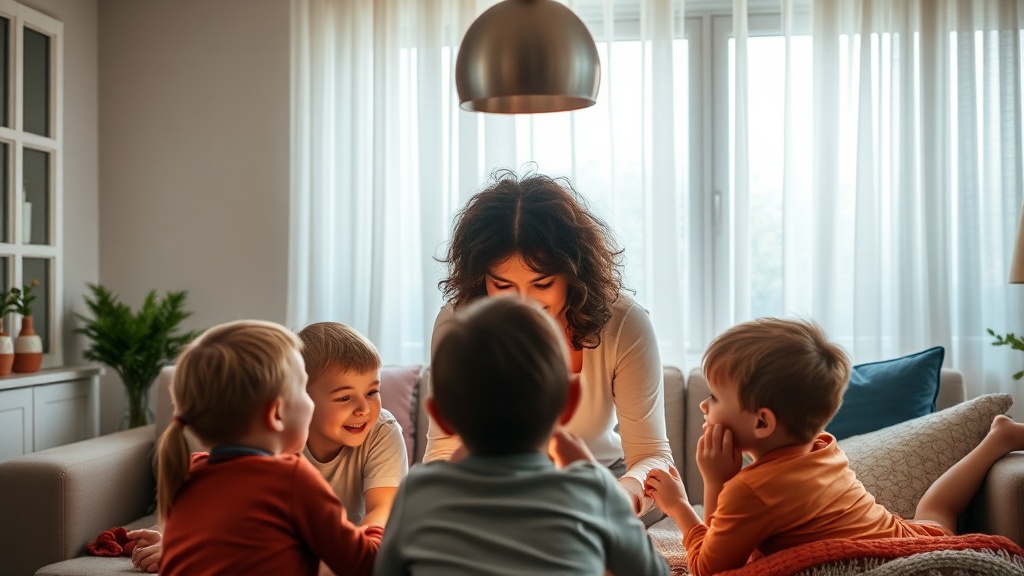
Unstructured family time means blocks of hours—yes, multiple hours—where no one dictates what happens next. No lessons, no screens, no parental agenda driving the action. Kids decide. Parents are present, available, but not directing.
Here's the thing: most families think they're doing this already. "We hang out on weekends," you might say. But look closer. Is someone suggesting an activity? Checking a phone? Putting on a movie "just for a bit"? Real unstructured time feels almost unnervingly open. The house gets messy. Boredom surfaces. People wander around.
The goal isn't entertainment—it's connection through shared space and genuine autonomy. That shared space matters more than most realize.
Why Is Free Play More Valuable Than Scheduled Activities?
Free play builds executive function—planning, problem-solving, emotional regulation—in ways that structured activities simply cannot replicate.
When a child figures out how to build a fort from couch cushions and blankets, they're not just playing. They're engineering. They're negotiating with siblings. They're managing frustration when the roof collapses. No soccer coach or piano teacher can manufacture these moments.
Research from the American Academy of Pediatrics confirms what many parents intuit: play is not frivolous—it's fundamental to cognitive and social development. Kids who engage in regular unstructured play show better stress management and creative thinking.
That said, the modern parenting landscape pushes hard in the opposite direction. Every hour gets accounted for. Soccer on Tuesdays, karate on Thursdays, tutoring squeezed in between. The belief—that more structure equals more advancement—runs deep.
Worth noting: scheduled activities aren't bad. They're just incomplete. A child needs both the guidance of instruction and the freedom of exploration. Most families today have the ratio dangerously wrong.
The catch? Unstructured time looks unproductive from the outside. No certificates get earned. No skills get visibly mastered. The benefits accrue slowly, invisibly, which makes this approach a hard sell in achievement-oriented circles.
How Do You Create Space for Unstructured Time?
Start by protecting weekend mornings. Block them like you'd block a doctor's appointment—non-negotiable, recurring, sacred.
Most families find that two to four hours of true unstructured time yields the best results. Less than that and kids barely get through the "I'm bored" phase before it's over. More than that and chaos can overwhelm (though some families swear by entire unstructured days).
The transition feels rough at first. Kids accustomed to constant stimulation will flail. They'll complain. They'll ask for screens every four minutes. This is normal. The brain adjusts—usually within two to three weeks of consistent practice.
Parents play a specific role here: the holder of boundaries. Not the cruise director. Not the entertainer. The person who says "nope, no screens" and then goes back to reading, cooking, or puttering around. Your presence matters. Your direction doesn't.
Here's a practical framework for different age groups:
| Age Group | Parent's Role | Typical Activities That Emerge |
|---|---|---|
| 2-5 years | Safe environment setter, occasional material provider | Fort building, dress-up, water play in the sink, endless snack requests |
| 6-9 years | Conflict mediator (only when necessary), interested observer | Board games, outdoor exploration, craft projects, imaginative play |
| 10-13 years | Available adult, conversation starter | Reading, hobby development, friend time (in person or calls), cooking experiments |
| 14+ years | Parallel presence, respect for privacy | Music practice, creative projects, deeper conversations, independent pursuits |
The table oversimplifies, of course. A twelve-year-old might still build forts. A four-year-old might want to help cook. The point isn't rigid categorization—it's understanding that your involvement should decrease as competence grows.
What About Screens During Unstructured Time?
Screens kill unstructured time. Not diminish—kill.
Even background TV changes how children play. Studies show shorter attention spans, less complex play narratives, and reduced social interaction when screens are present. The Child Mind Institute offers clear guidance: true unstructured play requires screen-free environments.
This is where many families stumble. Screens are easy. They're the path of least resistance. Removing them creates friction—at least initially.
Some practical alternatives to keep handy:
- A cardboard box stash (Amazon deliveries finally pay off)
- Art supplies—Crayola markers, cheap watercolor palettes, reams of paper
- Building materials—Magna-Tiles, LEGO bricks, wooden blocks
- Outdoor access—even a small patio or stoop changes everything
- Musical instruments—a $30 ukulele from Guitar Center beats another hour of YouTube
You don't need a Pinterest-worthy playroom. You need tolerance for mess and a willingness to let kids be bored.
How Do You Handle the "I'm Bored" Complaints?
You don't fix them.
Boredom is the gateway. It's the uncomfortable feeling that precedes creativity. When kids hit that wall—and you don't rescue them—they eventually push through.
The typical progression looks like this: complaining, listless wandering, half-hearted toy engagement, then—sometimes suddenly—deep absorption. That final stage? That's where the magic lives.
Parents who rush in with suggestions interrupt this process. "Why don't you build with your LEGOs?" sounds helpful. It's actually harmful. You're teaching that boredom is an emergency requiring external solutions.
A better response: "Sounds like you're figuring things out." Then go back to your own activity. Make tea. Fold laundry. Read a novel.
Your modeled behavior matters immensely. Kids notice when parents constantly check phones versus when they engage in sustained attention—reading, crafting, cooking without podcast accompaniment.
Philadelphia families have a distinct advantage here. Fairmount Park offers 2,000 acres of unstructured exploration space. The Wissahickon Valley trails provide terrain for unscripted adventure. Even urban pockets—Rittenhouse Square on a Sunday morning, the Italian Market on a slow afternoon—create opportunities for observation and curiosity that no scheduled activity can match.
What If Only One Parent Values Unstructured Time?
Parenting philosophy conflicts are common—and this one can get tense.
The parent pushing for more structure often fears kids falling behind. They see empty hours as wasted potential. They worry about college admissions before the child can tie their shoes properly.
Here's the thing: you don't need perfect alignment to make progress. Start small. Protect one morning per week. Document what happens—photos of focused play, notes about unexpected conversations. Evidence sometimes persuades where arguments fail.
Consider reading The Idle Parent by Tom Hodgkinson together, or exploring resources from Catholic family resource sites that emphasize presence over programming. Shared language helps.
That said, some families maintain different philosophies—and that's survivable too. Kids adapt to different expectations with different caregivers. Consistency within each parent's time matters more than perfect alignment between parents.
How Long Until You See Results?
Most families report a shift around the three-week mark. The first two weeks are hardest—resistance peaks, everyone questions the experiment. By week three, kids start initiating their own play. They stop asking for screens as frequently. They get—dare we say it—better at entertaining themselves.
The deeper benefits take longer. The improved emotional regulation, the stronger sibling bonds, the creative confidence—these develop over months and years. Slow parenting is, appropriately, slow.
Worth noting: unstructured time isn't a miracle cure for family dysfunction. If underlying conflicts exist, unstructured time might actually surface them. Kids fight. Parents lose patience. The mess accumulates.
That's okay. Connection doesn't require perfection. It requires presence. Sometimes presence means navigating conflict together. Sometimes it means sitting in the same room, each person absorbed in separate activities, sharing space without demanding interaction.
Both count. Both build the family fabric in ways that overscheduled, hyper-managed childhoods simply cannot replicate.
Steps
- 1
Clear the Calendar
- 2
Create Device-Free Zones
- 3
Follow Your Child's Lead