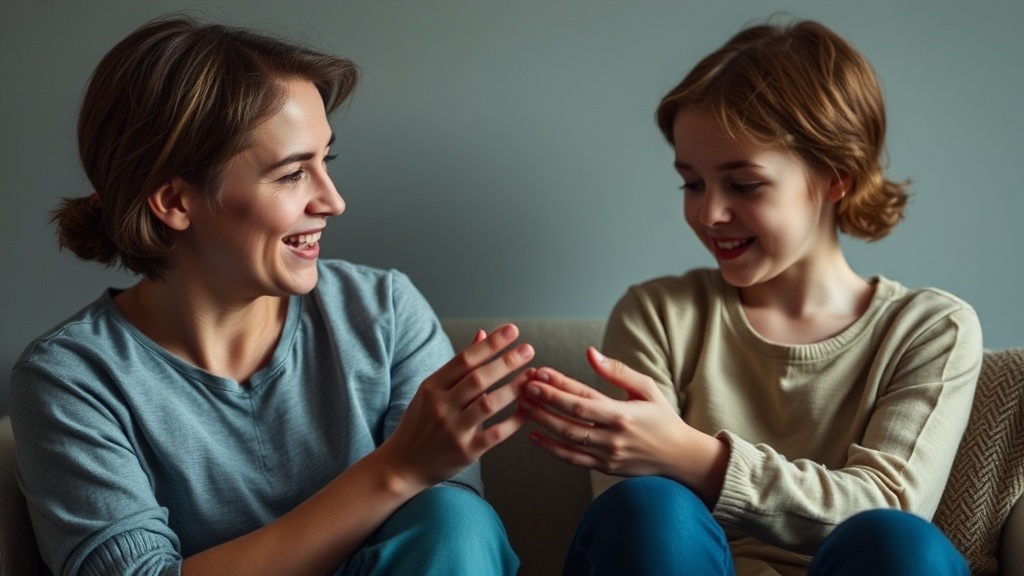
The Art of Slow Parenting: Embracing Presence Over Pressure

This guide explores the philosophy and practice of slow parenting — a deliberate approach that prioritizes meaningful connection over packed schedules and constant achievement. Parents overwhelmed by the pressure to optimize every moment will find concrete strategies for creating breathing room in family life, reducing stress for both children and adults, and building deeper relationships through intentional presence.
What Is Slow Parenting, Really?
Slow parenting isn't about moving at a snail's pace or abandoning all structure. It's a conscious rejection of the hyper-scheduled, achievement-obsessed approach that's become standard in modern family life. The philosophy centers on allowing children unstructured time to explore, imagine, and simply be — without constant adult direction or electronic entertainment.
Carl Honoré, author of Under Pressure: Rescuing Our Children from the Culture of Hyper-Parenting, popularized the term after noticing how the "slow food" movement's principles — quality over speed, presence over productivity — could transform family dynamics. The approach gained traction through his writing and subsequent media coverage on platforms like NPR discussing parenting culture shifts.
The core principles are straightforward: fewer scheduled activities, less screen time, more outdoor play, and parental presence without hovering. That said, slow parenting looks different in every household. For some families, it means cutting extracurriculars from five days to two. For others, it's declaring Saturday mornings device-free and seeing what unfolds.
Worth noting — this isn't laziness disguised as philosophy. Slow parenting demands more from adults, not less. It requires resisting the social pressure to enroll toddlers in Mandarin immersion and travel soccer leagues. It means tolerating boredom (theirs and yours) while children figure out how to build a fort from couch cushions.
How Do You Actually Start Slow Parenting?
Begin with a schedule audit — write down every activity, lesson, and organized event your child participates in during a typical week. Then eliminate one. Just one. See what happens with that reclaimed time.
The transition creates discomfort. Children accustomed to constant stimulation will initially complain about boredom. Parents will feel guilty watching neighbors shuttle kids to gymnastics, piano, and coding camp while their own children build LEGO towers in the living room. Here's the thing — that discomfort passes. Usually within two weeks, children rediscover their capacity for independent play.
Practical starting points include:
- Establishing "slow hours" — specific times (perhaps 4-6 PM weekdays, Sunday mornings) when no screens run and no activities are scheduled
- Creating boredom-friendly spaces — keep open-ended materials accessible: wooden blocks, art supplies, fabric scraps, cardboard boxes
- Practicing the "pause" — when children encounter minor frustrations (a stuck zipper, a tipped block tower), wait 30 seconds before intervening
- Cutting extracurriculars by 30% — if your child does five activities, drop it to three or four for one semester
The American Academy of Pediatrics emphasizes the importance of play in healthy child development, noting that unstructured playtime allows children to develop creativity, problem-solving skills, and emotional resilience — benefits that structured activities alone cannot replicate.
What Are the Real Benefits for Children?
Research consistently shows that children with more unstructured time develop stronger executive function skills — the ability to plan, focus attention, remember instructions, and juggle multiple tasks successfully. These capacities predict academic and life success more reliably than early reading programs or violin lessons.
Children raised with slow parenting principles often display:
| Characteristic | Children with Packed Schedules | Children with Ample Free Time |
|---|---|---|
| Creativity | Often wait for direction; struggle with open-ended tasks | Generate novel solutions; comfortable with ambiguity |
| Stress levels | Higher cortisol; more anxiety symptoms | Lower baseline stress; better emotional regulation |
| Sleep quality | Frequently disrupted by evening activities | More consistent routines; better rest |
| Sibling relationships | Less shared unstructured time; more conflict | Stronger bonds through cooperative play |
| Academic motivation | Extrinsic focus; burnout by middle school | Intrinsic curiosity; sustained engagement |
The catch? These benefits take time to manifest. You won't see improved creativity after one screen-free afternoon. The neurological and psychological shifts require months of consistent practice. Many parents abandon the approach during the initial adjustment period when children (understandably) don't know what to do with themselves.
Long-term studies from the Society for Research in Child Development indicate that over-scheduled children often struggle with self-direction in adulthood — they've internalized the message that their time must be managed by external authorities, making independent decision-making challenging.
How Do You Handle the Social Pressure?
This is where slow parenting gets genuinely difficult. Other parents will question your choices. Teachers may express concern about reduced homework help (even when your child is performing adequately). Relatives will imply you're not doing enough to "give your child every advantage."
Responses vary by relationship. With casual acquaintances, deflection works fine — "We're trying something different this year." With closer friends, honesty builds alliances: "We're overwhelmed and cutting back. It's hard but necessary." With grandparents, emphasizing the research-backed developmental benefits often helps more than philosophical explanations.
Some practical social navigation strategies:
- Find your people — seek out other families practicing similar values. Playground meetups at local spots like Philadelphia's Clark Park or Smith Memorial Playground create community without the pressure of organized activities.
- Reframe the conversation — when asked "What activities is she in?" respond with what your child has been exploring independently: "She's really into building elaborate obstacle courses lately."
- Set boundaries firmly — "We don't do playdates on school days" or "Saturdays are family time" stated without apology or extensive explanation.
- Document the benefits — keep a journal of moments you witness: the elaborate story your child narrated during a car ride, the problem they solved alone, the deep sleep after an afternoon of outdoor play. These observations sustain you during doubt.
What About Screen Time and Technology?
Slow parenting doesn't require becoming Amish. Technology has its place. The goal is intentional use rather than default consumption — screens as tools for specific purposes, not background noise or constant entertainment.
Many slow parenting families adopt the "Waldorf approach" to media: delaying smartphones until high school, keeping televisions out of main living spaces, and treating tablets as occasional tools rather than daily companions. Others find middle ground — strict limits during the week, more flexibility on weekends. There's no single correct answer, only the question: does this technology serve our family's values and this child's development?
When you do reduce screen time, replace it with something genuinely engaging — not just "nothing." Stock your home with materials that invite interaction: board games like Catan Junior or Outfoxed, art supplies from Dick Blick or local craft stores, building sets like Magna-Tiles or Grimm's wooden rainbows. The quality of alternatives matters enormously.
How Does Slow Parenting Change the Parent?
Perhaps the most surprising outcome — you'll slow down too. When you're not constantly shuttling, scheduling, and managing, there's space to breathe. You notice things. The way sunlight hits the kitchen table at 4 PM. Your child's specific laugh when she's genuinely delighted versus performing happiness for an audience.
This isn't always comfortable. Many parents discover they've used busyness to avoid their own uncomfortable emotions or relationship tensions. The quiet forces confrontation with what you've been running from. Some people find they need their own support — therapy, meditation practice, honest friendships — to tolerate the stillness slow parenting invites.
That said, most parents who commit to the practice report reduced anxiety, improved relationships with their children, and a surprising discovery: they actually enjoy parenting more when they're not trying to optimize it. The pressure to produce perfect childhood experiences lifts. You're simply present, alongside your child, living an ordinary life with full attention.
There's no certificate of completion for slow parenting. No graduation ceremony where you're declared successfully present. The practice is ongoing, imperfect, and deeply personal. Some weeks you'll manage it beautifully — long afternoons at the creek, unhurried conversations, genuine connection. Other weeks, survival mode takes over and screens become babysitters while you meet deadlines. Both are acceptable. The goal isn't perfection; it's intention.
"Children need time to be bored. Boredom breeds creativity. When every moment is scheduled, children never learn to generate their own engagement with the world." — Dr. Teresa Belton, University of East Anglia
Start small. Pick one area — perhaps Wednesday afternoons, perhaps morning routines — and slow that single slice of your family's life. Notice what emerges in the spaces you create. Trust that presence, offered consistently, matters more than any enrichment program ever could.